
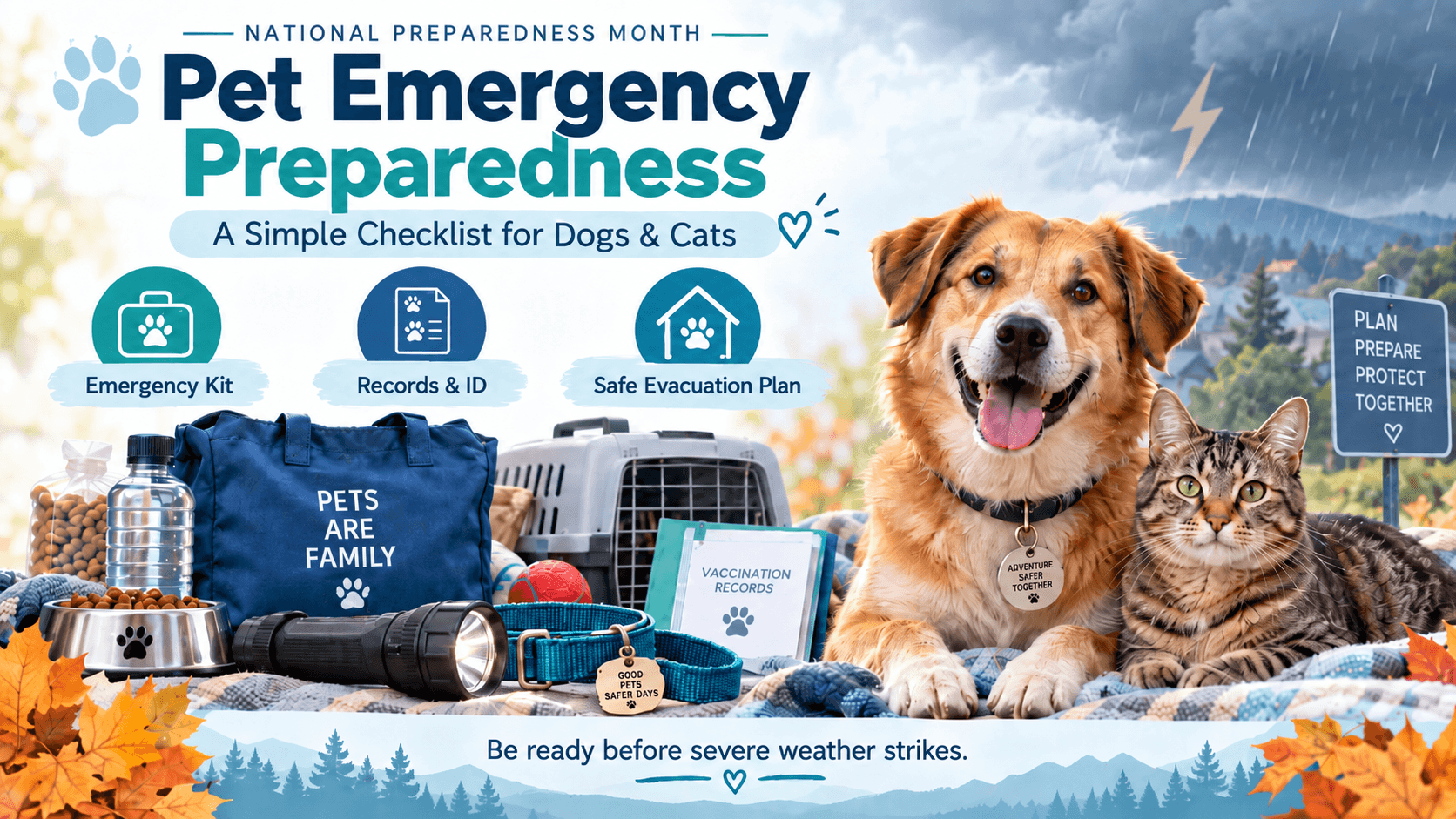
September is National Preparedness Month, which makes it a good time to ask a question many of us do not think about until the weather alerts start rolling in:
If you had to leave home quickly, would your pet be ready too?
Here in Central Illinois, emergencies may look different from other parts of the country. We may not be preparing for hurricanes, but we do know severe thunderstorms, tornado warnings, flooding, winter weather, power outages, house fires, and unexpected evacuations can happen.
And when life gets chaotic, pets depend on us to have a plan.
At Wenona Vet Care, we talk a lot about preventive care. Usually that means vaccines, parasite prevention, wellness visits, and routine screenings. But emergency planning is preventive care too. A little preparation now can make a stressful situation safer and more manageable for both you and your pet.
Why Pets Need Their Own Emergency Plan
In an emergency, the goal is not to create a perfect plan. The goal is to avoid scrambling.
Dogs and cats may become frightened by loud weather, sirens, unfamiliar people, travel, or changes in routine. Even calm pets can hide, bolt, refuse food, or become difficult to handle when they are scared.
Having supplies, records, and a transportation plan ready ahead of time can help you act quickly and calmly.
It is also important to remember that not every emergency shelter or temporary housing option accepts pets. The American Red Cross notes that many shelters may not be able to accept pets for health and safety reasons, so planning ahead for pet-friendly options matters.
Start With a Pet Emergency Kit
Your pet’s emergency kit does not need to be fancy. A sturdy tote, backpack, or waterproof container works well. The key is keeping the supplies together and easy to grab.
A basic dog or cat emergency kit should include:
- At least several days of food and water
- Food and water bowls
- Any daily medications
- A copy of vaccine records and important medical history
- A leash, harness, and collar with ID tags
- A secure carrier or crate
- Litter, disposable litter trays, or waste bags
- Paper towels, cleaning supplies, and trash bags
- A pet first aid kit
- Recent photos of your pet
- Comfort items, such as a small blanket, toy, or familiar treat
Ready.gov specifically recommends including items for your pet’s medical needs, backup collars with ID tags, harnesses or leashes, and comfort items like favorite toys or bedding to help reduce stress.
Do Not Forget Medications and Prescription Food
If your pet takes daily medication or eats a prescription diet, emergency planning becomes even more important.
Try to avoid waiting until the last dose or last scoop before requesting refills. During severe weather, supply delays, road closures, clinic schedule changes, or power outages, refills may take longer than expected.
This is especially important for pets with conditions such as:
- Seizures
- Heart disease
- Diabetes
- Thyroid disease
- Kidney disease
- Allergies or chronic skin disease
- Anxiety
- Gastrointestinal conditions requiring prescription food
If your pet relies on medication or prescription food, ask your veterinary team how much backup supply is reasonable to keep on hand.
Keep Vaccine Records Easy to Access
In an emergency, you may need proof of vaccination quickly. This may be required for boarding, temporary housing, grooming facilities, travel, shelters, or emergency veterinary care.
Rabies vaccination records are especially important. If a pet is lost, injured, bites someone out of fear, or is exposed to wildlife during an emergency, having current records available can help guide next steps.
Keep copies in more than one place:
- In your pet emergency kit
- On your phone
- In your email
- Through your veterinary clinic’s app or online portal, if available
If you are not sure whether your pet is current on vaccines, contact Wenona Vet Care before an emergency happens.
Microchips Matter — But Only If the Information Is Current
A collar and ID tag are helpful, but collars can break or slip off. A microchip provides permanent identification, but it only works if your contact information is up to date.
Take a few minutes this month to check:
- Is your pet microchipped?
- Is the microchip registered?
- Is the phone number current?
- Is your address correct?
- Is there a backup contact listed?
Ready.gov encourages pet owners to keep microchip registration information current so they can be contacted if their pet gets lost during a disaster.
If your pet is not microchipped, your veterinary team can talk with you about how the process works.
Make Carriers and Crates Less Scary
For many cats, the carrier appears only before a car ride to the veterinary clinic. We understand why that does not make it their favorite household object.
During an emergency, though, carriers and crates help keep pets safe. They also make transportation easier and reduce the risk of a frightened pet escaping.
To help your pet feel more comfortable:
- Leave the carrier out occasionally, not just before appointments
- Place treats, toys, or bedding inside
- Practice short, positive crate or carrier sessions
- Make sure the carrier is the right size and closes securely
- Label carriers with your name and contact information
This is especially helpful for cats and small dogs, but larger dogs should also have a safe travel plan.
Know Where You Could Go
Before an emergency, think through where your pet could safely stay if you had to leave home.
Possible options may include:
- Pet-friendly hotels
- Family or friends who allow pets
- Boarding facilities
- Veterinary hospitals that offer boarding
- Local emergency shelter options
- A trusted neighbor who could help if you were away from home
The CDC recommends planning where pets can stay during an emergency and notes that local animal control or service agencies may provide guidance on protecting pets during emergencies.
It is also helpful to keep a list of emergency contacts in your kit, including your veterinarian, local emergency veterinary hospital, animal control, and a trusted backup caregiver.
Practice the “Where Are the Pets?” Plan
This may sound simple, but in a real emergency it matters.
Make sure everyone in the household knows:
- Where the leashes and carriers are kept
- Where the pet emergency kit is located
- Where each pet likes to hide
- Who is responsible for each animal
- Where to go during a tornado warning
- What to do if a pet escapes
For multi-pet households, this planning can prevent confusion. It also helps children understand their role without putting them in unsafe situations.
After the Emergency: Watch for Stress and Health Changes
Once the immediate danger has passed, pets may still need extra support. Stress can cause behavior or health changes, even after things seem “back to normal.”
Watch for:
- Hiding or clinginess
- Changes in appetite
- Vomiting or diarrhea
- Coughing or difficulty breathing
- Limping or wounds
- Urinating outside the litter box
- Excessive barking or vocalizing
- Increased anxiety or reactivity
- Missed medications
If your pet was injured, exposed to floodwater, around wildlife, overheated, without medication, or missing for any amount of time, call your veterinarian for guidance.
A Simple Preparedness Goal for This Month
Emergency planning can feel overwhelming, so start small.
This month, choose three things:
- Put together a basic pet emergency kit.
- Check your pet’s vaccine and microchip information.
- Decide where your pet could go if you had to leave home.
That is a great start — and much better than trying to figure it all out during a storm warning.
The Bottom Line
Preparedness is one of the most practical ways we can protect the pets we love. You do not need a complicated plan, but you do need a plan that includes every member of the family, paws included.
If you need help updating vaccines, locating records, discussing medications, or microchipping your pet, contact Wenona Vet Care in Wenona. Our team is happy to help you take simple steps now so you and your pet are better prepared later.