




Summer Is Fun — But It Can Be a Lot for Pets
By late June, summer is officially settling in. The days are longer, the weather is warmer, and many families are spending more time outside, traveling, grilling, or getting ready for July celebrations.
For our pets, summer can be exciting too. Dogs may get more walks, backyard time, and car rides. Cats may enjoy longer naps in sunny windows or extra birdwatching from the safety of home. But summer also brings a few seasonal risks that are easy to overlook.
Heat, humidity, parasites, storms, travel changes, cookouts, and fireworks can all affect dogs and cats differently. A little planning can go a long way toward keeping pets comfortable, safe, and healthy.
At Wenona VetCare, we want summer to be enjoyable for both pets and people — preferably with fewer emergency surprises and more happy tail wags.
Watch the Heat, Especially on Humid Days
Central Illinois summers can get hot and sticky, and pets do not handle heat the same way people do. Dogs rely heavily on panting to cool themselves, and cats may quietly seek cooler areas before owners realize they are uncomfortable.
Heat can be especially hard on:
- Senior pets
- Puppies and kittens
- Overweight pets
- Pets with heart or breathing issues
- Flat-faced breeds, such as Bulldogs, Pugs, Persians, and Himalayans
- Dogs who are very active or eager to keep playing
Signs of overheating can include heavy panting, drooling, weakness, vomiting, bright red gums, confusion, collapse, or distress. Cats may pant, hide, become restless, or seem unusually lethargic.
To help prevent heat-related illness:
- Walk dogs early in the morning or later in the evening
- Keep outdoor time short during peak heat
- Offer fresh water often
- Make sure pets have shade and airflow
- Never leave pets in a parked car
- Avoid intense exercise on hot or humid days
If your pet seems overheated or is acting abnormal after being outside, contact your veterinarian right away.
Don’t Forget About Hot Pavement
Dogs may be excited to go for a walk, but pavement can become painfully hot in summer. Asphalt, sidewalks, and parking lots can burn paw pads, even when the air temperature feels manageable.
A simple rule: if the pavement is too hot for your hand, it is too hot for your dog’s paws.
Try walking on grass when possible, choosing cooler times of day, and checking your dog’s paw pads regularly for redness, peeling, or tenderness. Cats who go outdoors or spend time on patios can also be exposed to hot surfaces, so they need protection too.
Cookouts Are Not Always Pet-Friendly
Backyard cookouts are a summer favorite, but they can create some sneaky hazards for pets. Many dogs are talented at finding dropped food before anyone else notices. Cats may be more subtle, but they are certainly not above investigating a plate left unattended.
Foods and items to keep away from pets include:
- Bones
- Corn cobs
- Greasy meat scraps
- Onions and garlic
- Grapes and raisins
- Chocolate desserts
- Alcohol
- Wooden skewers
- Food wrappers
- Sugar-free foods containing xylitol
Even small amounts of certain foods can cause stomach upset, pancreatitis, choking, obstruction, or toxicity. It is best to ask guests not to feed pets from the table and to keep trash covered or out of reach.
If your pet eats something they should not have, call your veterinary team for guidance. It is always better to ask early than to wait and worry.
Fireworks and Summer Storms Can Be Scary
Late June is also a good time to start thinking about fireworks. Waiting until July 4th evening to make a plan is usually not ideal — especially if your dog is already pacing, panting, barking, or hiding under the bed.
Cats can be frightened by fireworks too, even if they show it differently. Some cats hide, stop eating, avoid the litter box, or become more withdrawn.
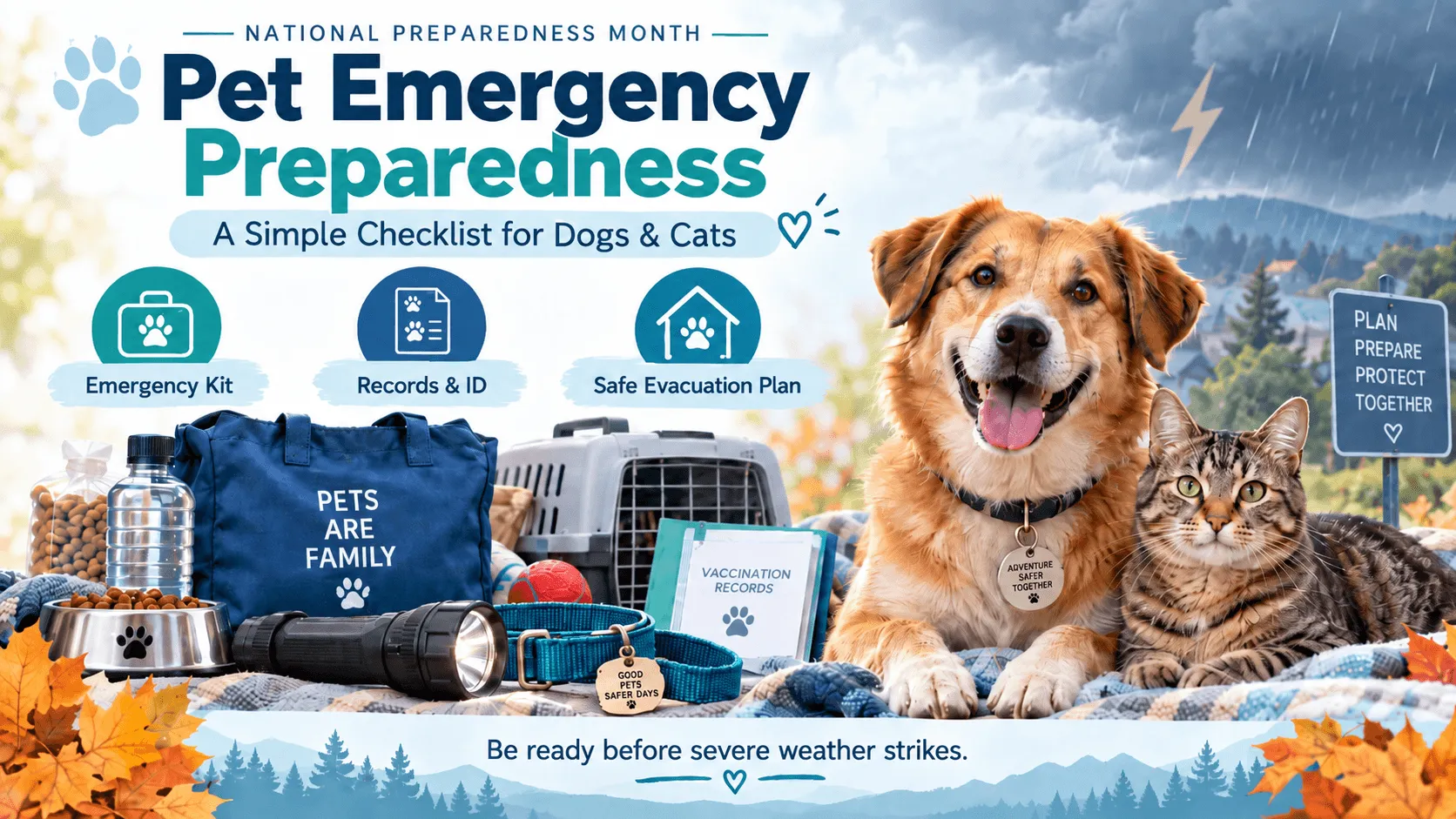
A few ways to help pets feel safer during fireworks or storms:
- Keep pets indoors
- Close windows, blinds, and curtains
- Turn on a fan, TV, or white noise
- Create a quiet resting space
- Make sure pets are wearing ID tags
- Confirm microchip information is current
- Avoid forcing a scared pet to “face” the noise
- Give anxious pets a safe place to hide
If your pet has a history of severe noise anxiety, contact Wenona VetCare before fireworks season is in full swing. Some pets benefit from a behavior plan, calming strategies, or prescription support when appropriate.
Travel Plans? Think Through Your Pet’s Needs First
Summer often means road trips, weekend visits, boarding, camping, or family vacations. Whether your pet is coming with you or staying behind, it helps to plan ahead.
Before traveling with a pet, consider:
- Is your pet comfortable in the car?
- Are vaccines and parasite prevention current?
- Do you have enough medication and food?
- Is your pet’s microchip information up to date?
- Will your destination be safe for your pet?
- Does your pet need records for boarding or travel?
For cats, travel can be especially stressful. A secure carrier, familiar bedding, and a quiet environment can help. For dogs, regular breaks, water, leash safety, and avoiding hot cars are essential.
If your pet becomes anxious, carsick, or stressed during travel, your veterinarian can help you talk through options before the trip.
Keep Up with Parasite Prevention
Warm weather means fleas, ticks, mosquitoes, and intestinal parasites are active. Even pets who mostly stay indoors can still be exposed. Dogs may pick up ticks in grass or wooded areas, while mosquitoes can make their way inside and put both dogs and cats at risk.
Year-round prevention is one of the easiest ways to protect your pet’s health. If you are unsure whether your pet is current on flea, tick, or heartworm prevention, summer is a good time to check.
Your veterinary team can recommend safe, effective options based on your pet’s species, age, weight, lifestyle, and health history.
Small Changes Can Make Summer Safer
The good news is that summer safety does not have to be complicated. Most of it comes down to noticing what your pet needs and preparing for seasonal risks before they become problems.
A simple summer pet care checklist might include:
- Fresh water available every day
- Shorter walks during hot weather
- Shade and cool resting areas
- Current flea, tick, and heartworm prevention
- Updated ID tags and microchip information
- A plan for fireworks or storm anxiety
- Safe food and trash storage during gatherings
- A wellness visit if your pet is overdue
These small steps can help prevent discomfort, illness, and stress.
We’re Here to Help Your Pet Have a Safe Summer
Summer should be a season for enjoying time with the pets we love — not worrying about heat, anxiety, or unexpected health issues.
If you have questions about summer safety, parasite prevention, travel, anxiety, or your pet’s overall wellness, the team at Wenona VetCare is here to help. We can help you make a plan that fits your pet’s needs and your family’s summer routine.
Contact us today to schedule your pet’s summer wellness visit or talk with our team about keeping your dog or cat healthy and comfortable this season.